Data Meets Demand: Five Montana High-tech Employment Trends from the Alliance Jobs Board (2021-2025)
In fall 2025, mathematics students from Carroll College analyzed Alliance jobs board data from 2021 - 2025 to uncover patterns and insights that can support job seekers, educators, employers, and community leaders shaping the future of Montana’s high-tech workforce. Graphic designed by Melissa Paulsen.
January 27, 2026
By Melissa Paulsen
The Montana High Tech Business Alliance jobs board features more than 100 open positions and internships from member companies across the state, offering a real-time snapshot of Montana’s high-tech employment landscape.
In fall 2025, mathematics students from Carroll College analyzed Alliance jobs board data from 2021 - 2025 to uncover patterns and insights that can support job seekers, educators, employers, and community leaders shaping the future of Montana’s high-tech workforce.
Read on for the key takeaways.
#1: Montana’s Job Market is Steady, but Competition is Increasing – Especially for Entry-level and Remote Roles
Alliance jobs board data shows that the number of jobs posted across entry, mid, and senior level roles remained relatively steady between 2021 - 2025. However, job applications increased across all levels, signaling growing interest—and competition—within Montana’s high-tech job market.
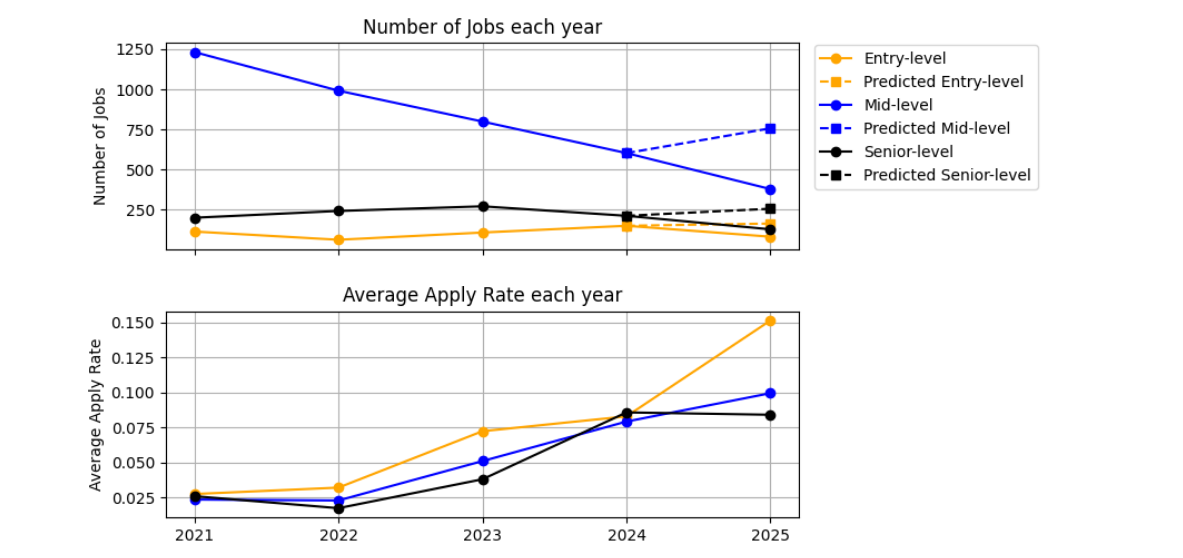
Entry-level jobs experienced the fastest growth in postings (+0.0298 per year), followed by mid-level (+0.0208) and senior-level (+0.0184) positions.
Additionally, the interest in and availability of remote roles have increased:
Entry-level remote jobs grew at a rate of 11.8 jobs per year.
Mid and senior-level roles saw a 2 – 3% annual increase in average application rates.
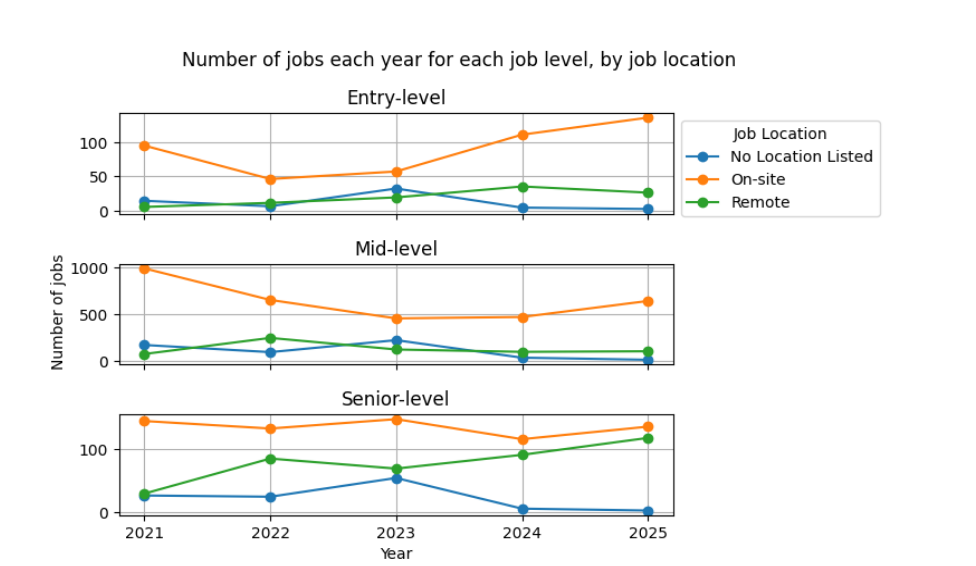
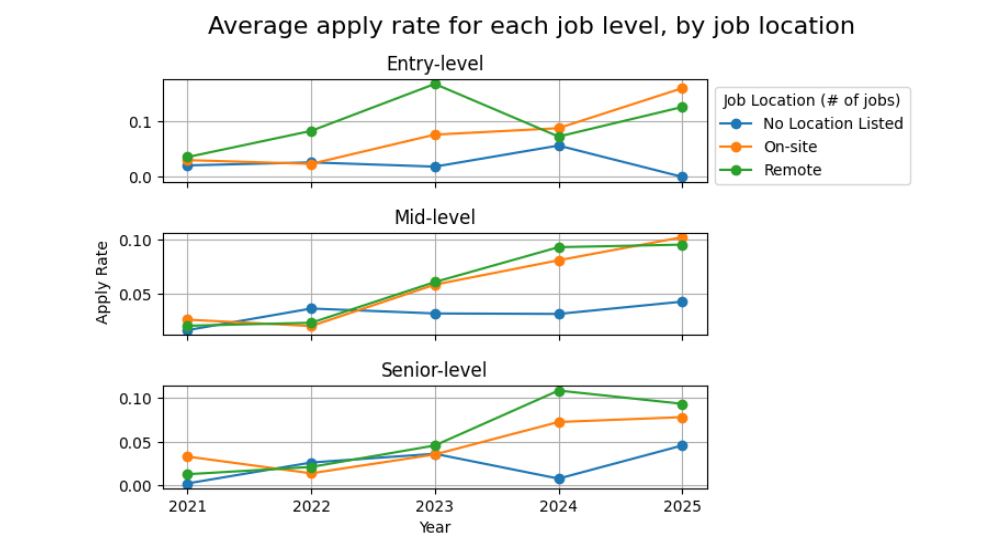
These findings align with national workforce trends, including FlexJobs’ 2026 Remote Work Trends Report which found that 85% of workers value remote work flexibility over salary when evaluating job opportunities.
#2: Computer Science, Engineering, and Management Jobs Are Declining Slightly but Remain Popular
Jobs posted on the Alliance jobs board fall into ten major occupational clusters:
Analytics
Business
Communications
Computer Science
Construction
Customer Service
Design
Engineering
Finance
Managerial
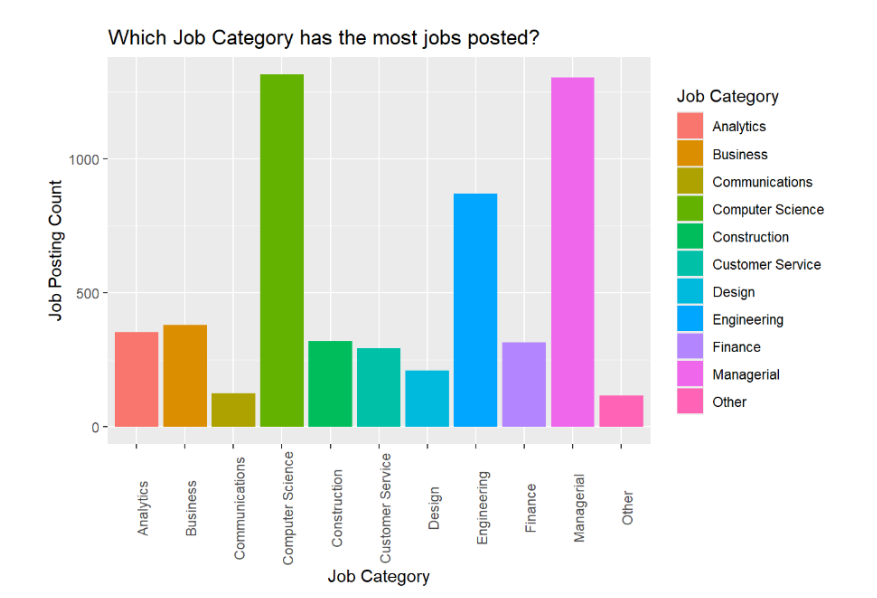
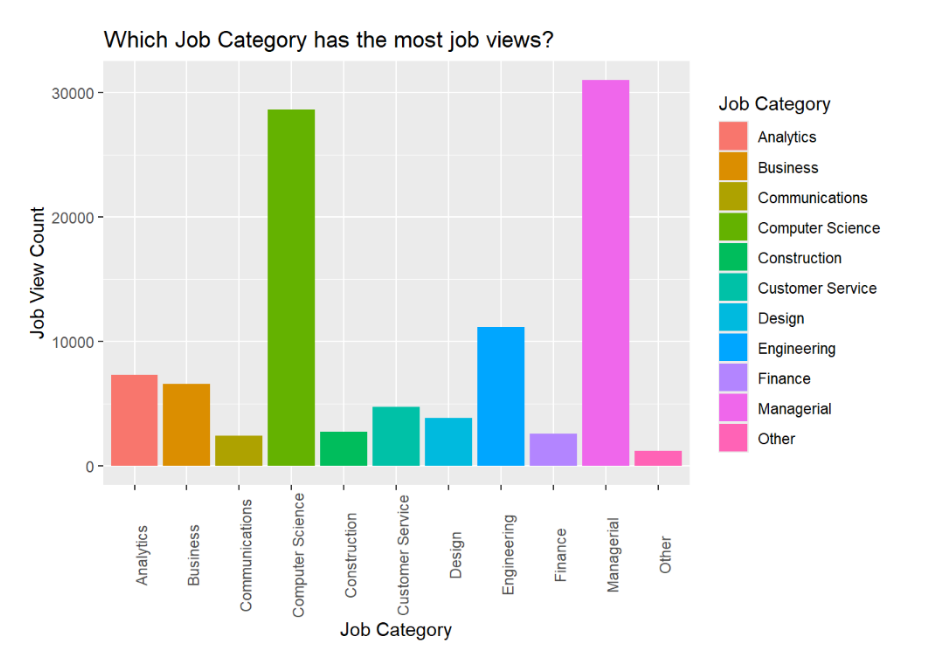
Among these categories, computer science, engineering, and managerial roles consistently received the highest engagement from job seekers, averaging more than 1,000 views per posting.
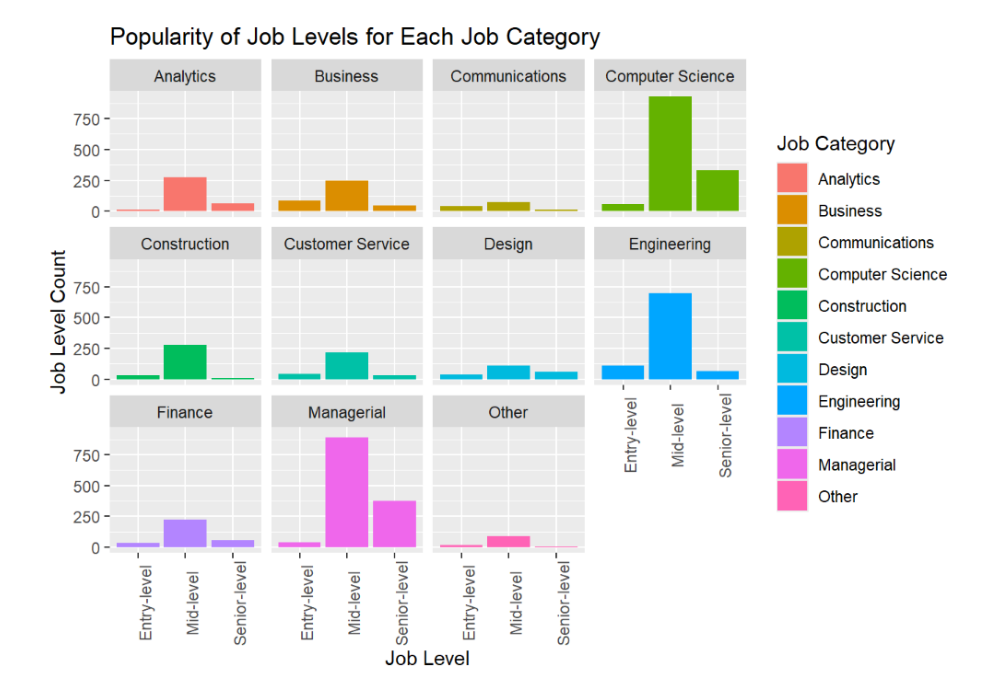
Mid-level positions accounted for the largest share of postings across all categories, even as total availability gradually decreased over time.
Computer science and managerial roles also represented the largest number of senior-level openings, with more than 500 senior-level jobs listed.
Although computer science positions have declined since 2022, the category remains one of the most viewed in the dataset, suggesting sustained interest in these roles.
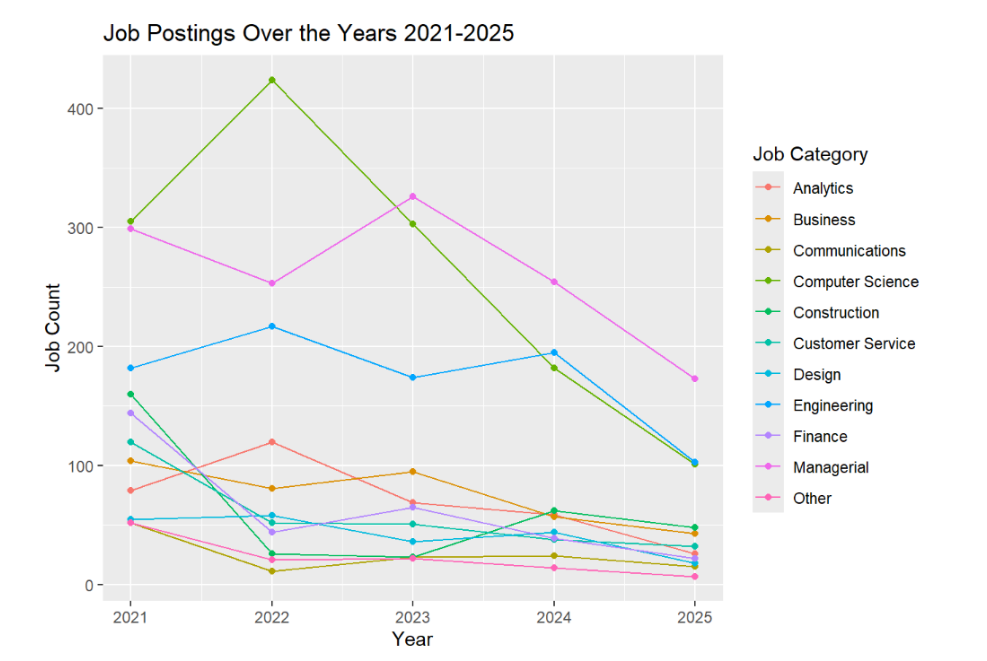
Similar gradual declines were observed across most other job clusters, including engineering and management.
#3: Employer Brand and Company Culture Matter More Than Job Type
For Alliance jobs board users, the employer itself emerged as the strongest driver of engagement, outweighing factors like location, job category, or job level.
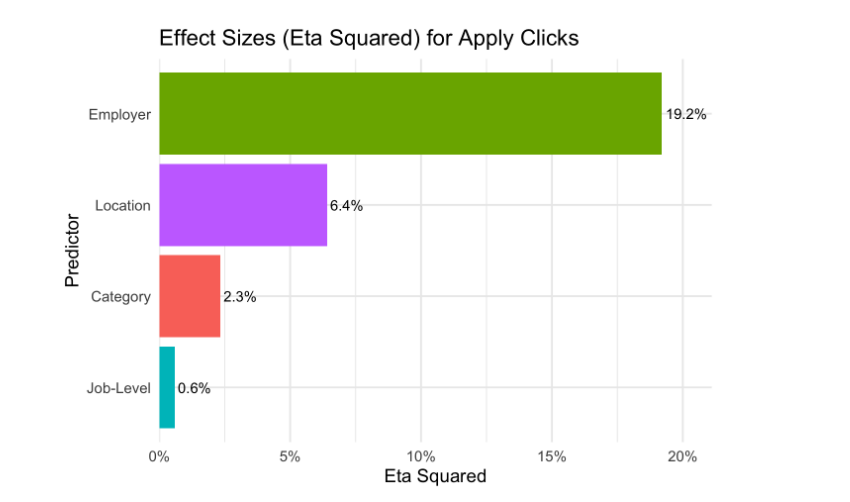
Across job views, clicks, and apply rates, employer identity had the greatest influence, followed by the job’s location. Job category and seniority level had comparatively minimal impact. For example, companies like Workiva and onX consistently attracted more than 10,000 views and 700 apply clicks across postings, regardless of job level or category. This suggests that brand recognition, reputation, and perceived company culture play a critical role in attracting job seekers.
#4: Workiva, Cushing Terrell, and onX Were the Most Active Employers in 2025
In 2025, MHTBA’s job portal listed 1,022 active job opportunities. Employers with the highest volume of postings included Workiva (cloud-based reporting), Cushing Terrell (engineering / design), and onX (GPS / mapping software. Each posted more than 60 jobs and received over 1,500 views during the year.
Most of these jobs were mid-level or senior leadership positions:
64% of Workiva’s postings were senior-level roles.
67% of Cushing Terrell’s listings were mid-level roles.
59% of onX’s postings focused on senior-level leadership.
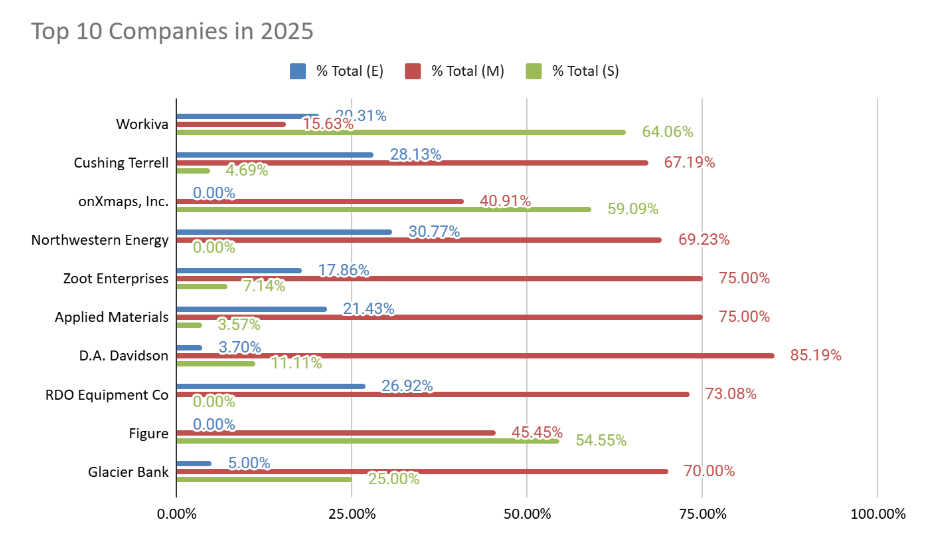
Other employers consistently leveraging the Alliance jobs board include Glacier Bank, NorthWestern Energy, Zoot Enterprises, Applied Materials, and D.A. Davidson.
The data set findings highlight the growing influence of technology across a wide range of industries. Many of these employers are not traditional software-as-a-service firms, yet they regularly post high-tech related jobs.
#5: Employers Outside Major Tech Hubs May Be Overlooked
Job views and application rates varied significantly across locations. Montana’s established tech hubs—particularly Gallatin, Missoula, and Flathead counties—consistently attracted more engagement than other regions.
Top job locations included:
Remote – 1,010 jobs
Bozeman – 839 jobs
Missoula – 731 jobs
Billings – 551 jobs
Multiple Cities – 470 jobs
Kalispell – 437 jobs
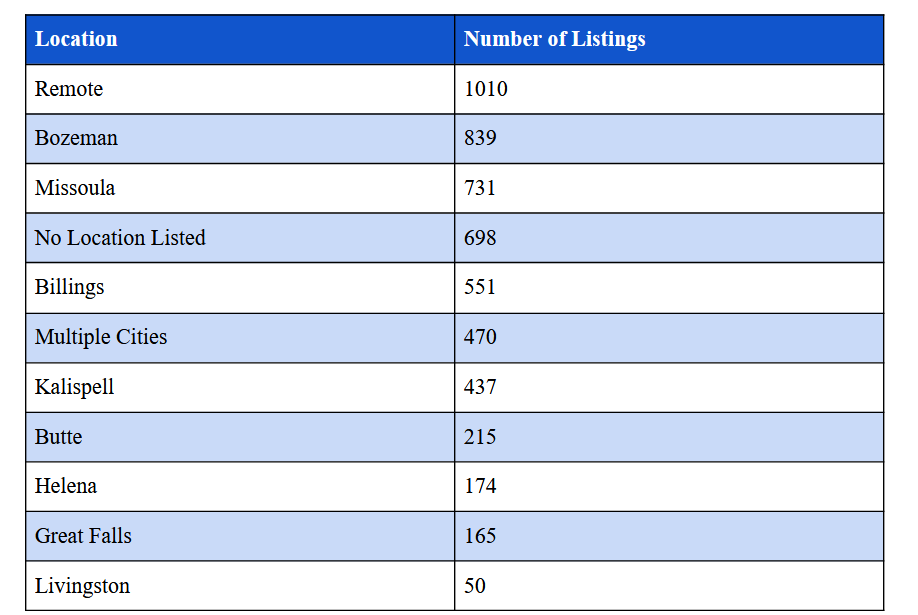
In a similar 2021 analysis, Bozeman, Missoula, and the Flathead Valley accounted for 22%, 17%, and 14% of total postings, respectively, while only 10% of jobs were remote.
Employers located outside Montana’s major tech hubs may benefit from stronger job-posting messaging and additional visibility to compete for talent. Additionally, directing applicants' attention to smaller companies and communities may help surface less competitive—and often high-quality—career opportunities.
Some companies have intentionally chosen to operate outside major hubs to help create more job opportunities in rural locations, like Allied Steel and VACOM in Lewistown.
What Does This All Mean?
Despite national headlines about tech layoffs and economic uncertainty, Montana’s high-tech job market remains stable. Opportunities have held steady, while competition—particularly for entry-level and remote roles—has intensified.
Strengthening training pathways, supporting emerging talent, and helping employers optimize how they communicate job opportunities will be critical for sustaining a healthy and accessible high-tech ecosystem in the years ahead.
This work is central to the mission of the Montana Jobs Network (MJN), which empowers Montanans to launch fulfilling careers close to home. In a time of rapid technological change, your help makes career pathways clearer and more attainable.
Please consider donating today. Your gift expands access to career education and strengthens Montana’s workforce pipeline.
Acknowledgments
Special thanks to Professor Kelly Cline and his Math in the Mountains students for their excellent work on this analysis, including:
Connor O'Brien
Sean-Paul Brown
Ingrid Carlson
Nick Clouse
Molly O’Connor
Roger Fierce
Thomas Foy
Wyatt Rutledge
Olivia Smith
About the Publisher: Launched in 2014, the Montana High Tech Business Alliance is a nonpartisan nonprofit association of more than 200 high tech and manufacturing companies and affiliates creating high-paying jobs in Montana. For more information, visit MTHighTech.org or subscribe to our biweekly newsletter.
The Montana Jobs Network (MJN), a 501(c)3 charitable nonprofit affiliated with the Alliance, empowers Montanans to launch high-paying careers. For more information, visit MTHighTech.org/montana-jobs-network.
About the Author: Melissa Paulsen is the communications coordinator for the Montana High Tech Business Alliance and Montana Jobs Network. She graduated from the University of Montana in 2022 with a BFA in creative writing and a minor in history.